Scammed Twice: The Cruel Rise of “Recovery” Fraud After Financial Loss
Orlando, FL —Financial scammers understand something most people do not:
Fraud networks exploit the emotional state of their victims with frightening precision.Victims are emotionally vulnerable immediately after loss. Desperation for hope and a solution, embarrassement, and isolation are normal responses to the calamity.
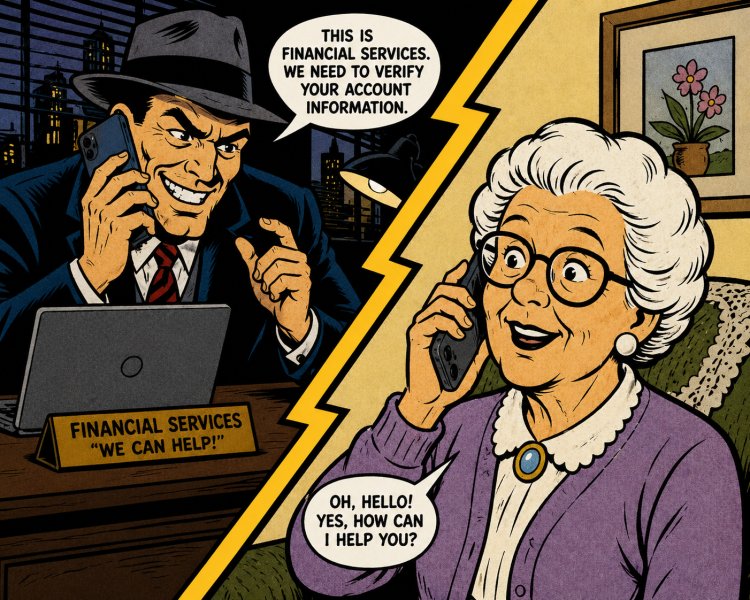
Sometimes within days (sometimes hours) victims may receive notifications or solicitation emails from “financial investigators”, calls from fake government agents, text essages from “blockchain recovery experts” or advertisements promising guaranteed retrieval of funds. Some criminals even pose as attorneys, federal agencies,, cryptocurrency tracing firms or consumer protection advocates. The language sounds professional. The websites appear legitimate. The promises feel reassuring, but the objective is the same: Extract more money from someone already in pain.
WHY SECONDARY SCAMS WORK
This form of fraud succeeds because it weaponizes three stages of emotions that most victims go through:
The first stage is shock at the realization of the financial loss. Vctims often struggle to process what happened. Their thinking shifts from, "Was I scammed?" to "Can I get my money back?" The urgency creates vulnerability. Fraud networks exploit this emotional state with frightening precision.
The second stage is shame for "allowing myself to fall for such foolishness". Many victims do not immediately tell family members or financial advisors. Silence creates isolation. Isolation creates exposure. And, scammers know that victims who fear embarrassment are less likely to seek legitimate help.
The third stage is hope. Manipulators know how powerful hope is. Recovery scammers offer promises that increase the victims hope to recoup their financial losses, save face and avoid embarrassment. The use such jargon phrases as, “inside access”, “guaranteed results”, “specialized blockchain tracing”, and “government partnerships” to win the victims confidence. The victim wants to believe recovery is possible. More often than not, that emotional desire overrides caution. They are nnot aware that victim information is often sold between scam networks. And, Once someone has been scammed once, they are viewed as a high-probability target.
The second loss is often more devastating than the first. This happens because victims are no longer just financially wounded—they are emotionally exhausted. Some lose retirement savings, emergency reserves, and the equity in their home. In severe cases, victims spiral into depression, social withdrawal, and health decline. This is why financial fraud is increasingly recognized not just as theft, but also as a public health issue.
WHAT VICTIMS SHOULD DO IMMEDIATELY AFTER DISCOVERING A SCAM
These steps should happen as quickly as possible.
STEP 1: STOP ALL COMMUNICATION: Do not negotiate. Do not argue. Do not send additional funds. Cut off all contact immediately.
STEP 2: CONTACT YOUR FINANCIAL INSTITUTION: Notify your bank, credit card company, brokerage firm and crypto exchange. Then request a review of your fraud situation, and transaction tracing assistance. Freeze accounts (as necessary).
STEP 3: CHANGE PASSWORDS IMMEDIATELY: Give special attention to banking logins, email accounts, investment accounts, and payment apps. Another recommended step is to enable two-factor authentication on all internet accounts.
STEP 4: REPORT THE FRAUD: File a complaint with the Internet Crime Complaint Center (IC3) operated by the FBI for cyber-enabled financial crimes. Next, report to the Federal Trade Commission (FTC). The FTC tracks patterns and supports enforcement efforts. You can also contact local law enforcement. A police report creates formal documentation that can be used by the IC#, FBI and FTC. When elderly persons are involved, notify Adult Protective Services.
STEP 5: DOCUMENT EVERYTHING: Create files, take screen shots, and/ or print paper copies of emails, wallet addresses, transaction receipts, phone numbers, chat logs. This evidence may support investigations.
STEP 6: TELL SOMEONE YOU TRUST: Isolation deepens damage and financial shame grows in secrecy.
Awareness is the first step towards recovery.
A person who has been deceived is not foolish. They are human. And humans can recover financially, emotionally and strategically.
The second scam succeeds because victims are desperate to undo the first one.
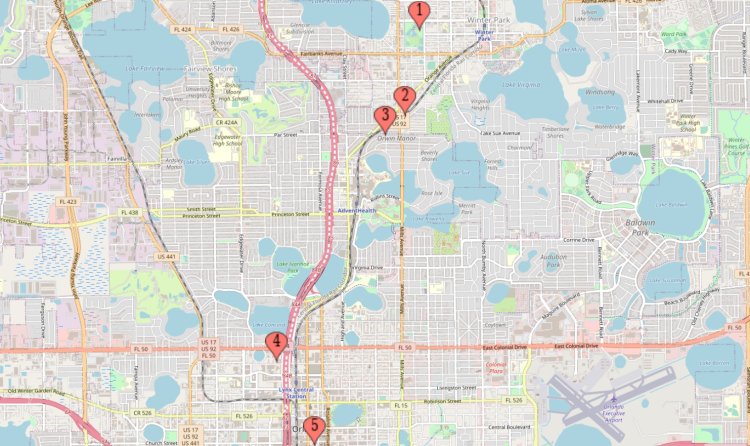
Central Florida’s large retiree and relocating population creates a significant target pool for organized fraud operations. Many victims are navigating new financial systems, new communities, and increasing digital dependence. These are conditions that scammers exploit aggressively.
Central Florida’s rapid population growth, particularly among retirees, creates a high-value target environment. New residents, new routines, and new digital connections create the exact conditions these scams exploit.
Financial loss at this level is not accidental. It is engineered.
Your protection is not luck. It is awareness, structure, and interruption.
That is the work. That is the responsibility.
That is The Joyful Money Report™.

 Dr. Livingston